Hand-Pulled Noodles: The Ancient Art of La Mian
A noodle master turns a lump of dough into hundreds of silky strands in thirty seconds. The craft behind la mian dates back four thousand years.
A noodle master grabs a lump of dough, stretches it, folds it, and stretches again. Thirty seconds later, he holds two hundred silky strands. La mian (拉面), hand-pulled noodles, ranks among China's oldest food traditions, with roots stretching back four thousand years.
A Technique Older Than History
Archaeologists at the Lajia site in Qinghai province uncovered a bowl of preserved noodles dating to 2000 BCE, making noodles one of humanity's oldest prepared foods. Scholars debate whether ancient cooks pulled, cut, or shaped those noodles, but texts from the Han Dynasty onward describe hand-pulling. By the Tang Dynasty, la mian had become street food across northern China, sold from carts to travelers and laborers.
The Science of the Dough
A noodle master starts with high-gluten flour, water, and a pinch of alkaline salt called peng hui. The salt relaxes the gluten network and gives the finished noodles their bounce and chew. The cook kneads the dough for twenty minutes or more until it turns smooth and elastic, then lets it rest. Without the alkaline salt, the dough snaps instead of stretching into long, thin strands.
Pulling: Skill Meets Physics
The cook rolls the rested dough into a thick rope, stretches it, folds it in half, and stretches again. Each fold doubles the strand count. Seven folds produce 128 noodles. Eight produce 256. The sequence takes under a minute. Thick round strands (da kuan) go into hearty beef broth. Thin angel-hair strands (mao xi) suit delicate soups. Flat ribbons (kuan) work best in stir-fries.
Regional Noodle Traditions
Regions across China claim distinct noodle identities. Lanzhou beef noodles, the best-known la mian dish, feature hand-pulled strands in clear beef broth with sliced beef, chili oil, cilantro, and garlic sprouts. In Xi'an, biang biang noodles are thick belt-like strips tossed with chili and vinegar. Beijing's zha jiang mian pairs wheat noodles with fermented bean paste. In Sichuan, dan dan noodles deliver chili oil and Szechuan peppercorn over thin wheat noodles.
Noodles at Hong Kong Palace
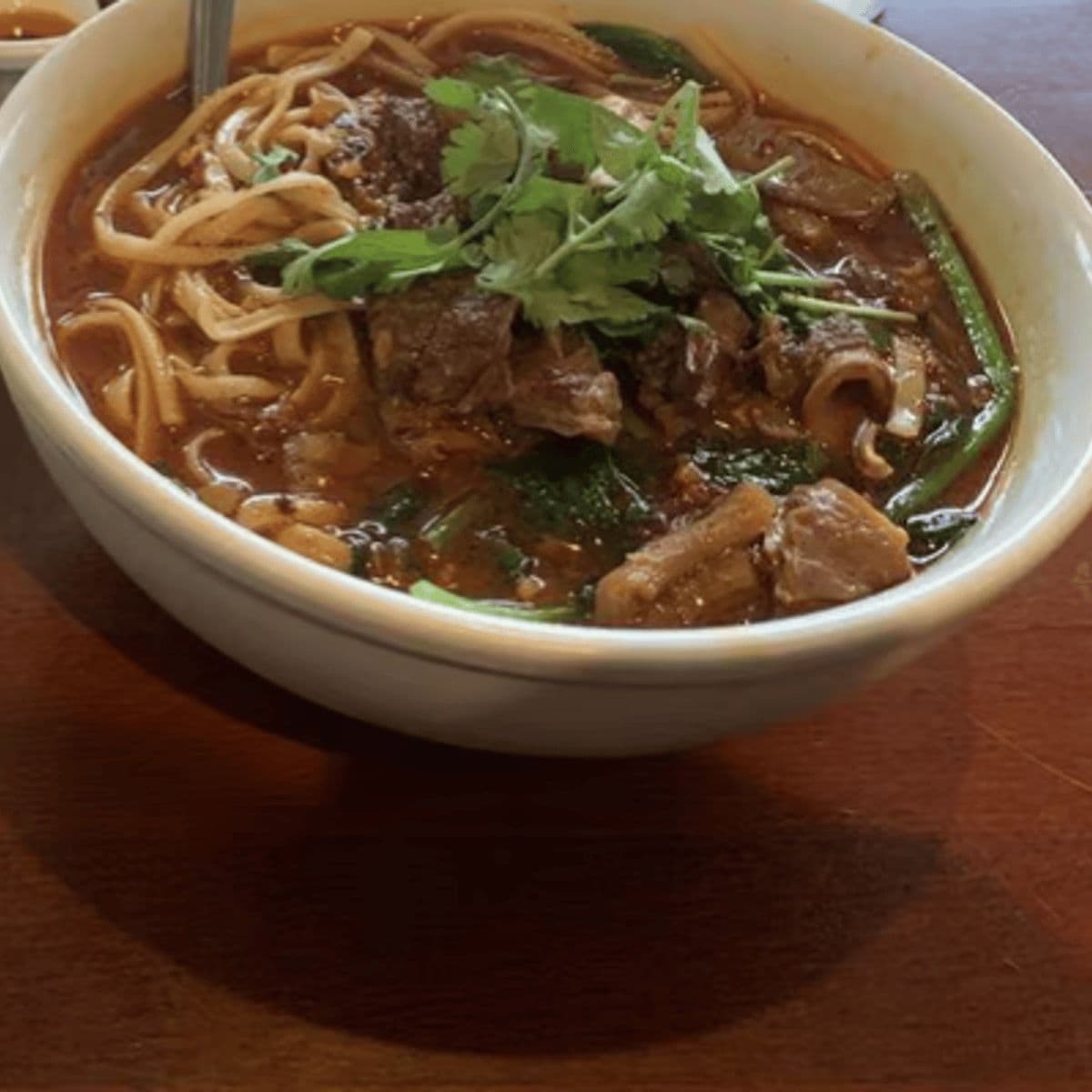
Our Braised Beef Noodle Soup at Hong Kong Palace in Falls Church delivers a rich, spiced broth over chewy wheat noodles. The Singapore Style Rice Noodles bring curry heat with shrimp and pork. Our Dan Dan Noodle hits with chili oil and ground pork. Order online or visit us to taste the tradition.
Hong Kong Palace · Falls Church, VA
Experience Authentic Sichuan Cuisine
Dine in, take out, or order delivery. Open daily 11 AM, last order 9:15 PM.