Dan Dan Noodles: The Street Food That Conquered Sichuan
Dan Dan Noodles started with Chengdu street vendors and became a benchmark of Sichuan sesame-chili cooking.
The name is literal. Dan Dan Noodles, 担担面 in Chinese, takes its name from the dan dan, the carrying pole street vendors balanced across their shoulders in 19th-century Chengdu. One end of the pole held a pot of simmering noodles. The other carried sauce, toppings, and bowls. The vendor walked the city streets, ladling out single portions for about one copper coin per bowl. That portable, made-to-order format shaped the dish: fast, concentrated, eaten standing up. Today, Dan Dan Noodles rank among the most recognized Chinese dishes globally. In Japan alone, where chef Chen Kenmin (陳建民) introduced an adapted version in the 1950s, it has become one of the three most ordered Chinese dishes in the country.
The Original Recipe
Early Dan Dan Noodles were simpler than today's versions. The sauce started with sesame paste, preserved vegetables, and a handful of dried chilies. Vendors didn't have room on a shoulder pole for elaborate toppings. The noodles were thin wheat noodles, cooked in the pot, sauced and served in one motion. The entire transaction took under a minute. Speed and portability were the constraints that shaped the dish.
How the Recipe Evolved
As Dan Dan Noodles moved from street carts into restaurants, the recipe expanded. Chefs added crispy ground pork cooked with fermented Yibin ya cai (preserved vegetables). Tahini replaced or supplemented the original sesame paste. Szechuan peppercorn-infused chili oil became essential, providing the "ma la" numbing heat that defines the dish. Black vinegar added acidity. Garlic and ginger deepened the base. The soupy broth-forward version popular in northern Sichuan diverged from the drier, more concentrated sauce of Chengdu's preparation.
Two Schools: Dry and Soupy
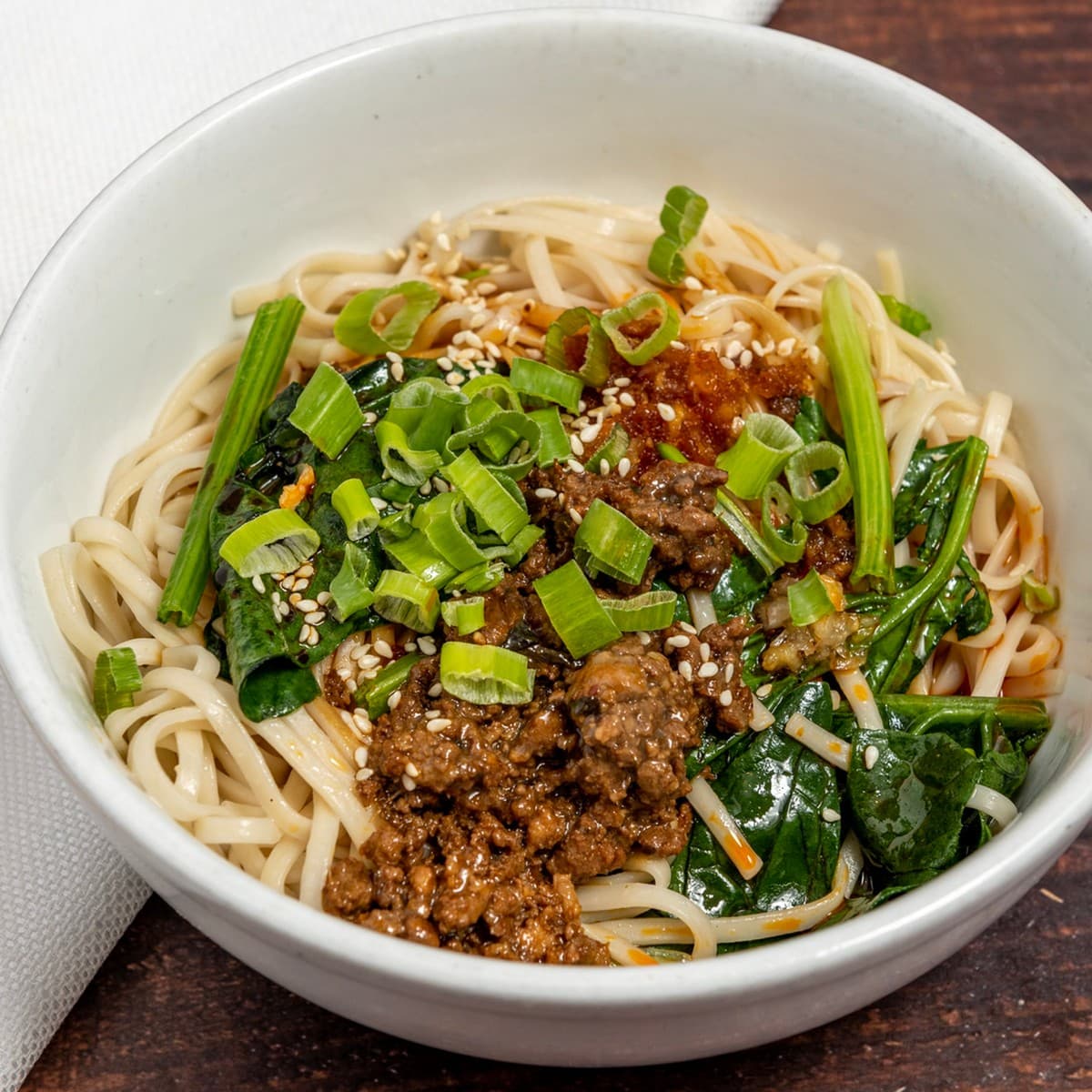
Depending on where in China you order Dan Dan Noodles, you get one of two preparations. The Chengdu dry version concentrates all the sauce elements into a thick coating that clings to each noodle. You toss it before eating. The result is oily, sharp, and concentrated. The soupy version, common in Sichuan's northern cities, floats the noodles in bone broth with the sauce components thinned into the liquid. Both preparations trace back to the same shoulder pole vendor.
Dan Dan Noodles Outside China
Dan Dan Noodles traveled beyond Sichuan through Chinese immigration and the global spread of Sichuan cuisine in the 1990s and 2000s. The Sichuan restaurant boom in the United States accelerated sharply after 2005, when the USDA lifted a 37-year import ban on Szechuan peppercorn, the dish's defining ingredient. American versions often reduce the Szechuan peppercorn and substitute peanut butter for tahini. The sesame-chili core is distinctive enough that the dish remains recognizable even through those changes.
Dan Dan Noodles at Hong Kong Palace
Our Dan Dan Noodles follow the Chengdu dry preparation. Thin wheat noodles, ground pork cooked with fermented ya cai, sesame paste, chili oil made with whole Szechuan peppercorns, and black vinegar. The bowl arrives unsauced; the components sit layered underneath the noodles. Toss everything before the first bite. Order online or visit us in Falls Church to try the dish that started on a street vendor's shoulder. For what separates our version from the peanut-butter-and-broth interpretation served elsewhere, read why we serve the best authentic Dan Dan Noodles in Falls Church.
Hong Kong Palace · Falls Church, VA
Experience Authentic Sichuan Cuisine
Dine in, take out, or order delivery. Open daily 11 AM, last order 9:15 PM.